Outline maps of the 50 U. S. States
Показаны сообщения с ярлыком English. Показать все сообщения
Показаны сообщения с ярлыком English. Показать все сообщения
понедельник, 7 июля 2014 г.


вторник, 4 января 2011 г.
Homestead Strike
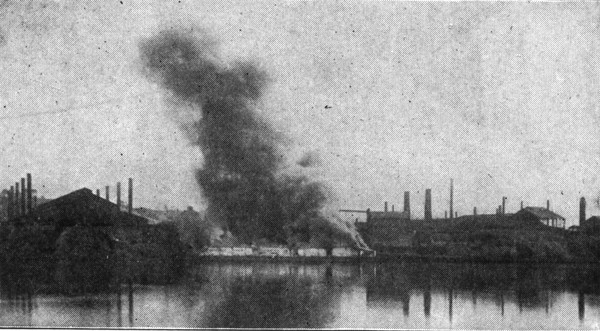
Homestead Strike
A
confrontation between workers and the administration of the Carnegie
Steel Company, Limited, at Homestead, Pennsylvania, started in June
of 1892 and lasted for five months. The strike was organized and led
by members of Amalgamated Association, a powerful trade union of
steel workers. About 3,800 workingmen took part in it. Neither side
of the conflict wanted to compromise. The struggle was intense,
cruel, and often bloody. Seven strikers died during a firefight with
the Pinkerton detectives. Henry Frick, a chairman of the corporation,
was wounded during an assassination attempt. What caused the strike?
To
answer the question first of all we should examine the working and
living conditions of the Homestead workers. The information about the
subject is quite controversial. There is no doubt that the work at a
steel mill at that time was harsh and dangerous. A Carnegie’s
steelworker compared his job with “working aside of hell ahead of
time”(Wolff, L., Lockout, p.36). Here is a description of the
Homestead mill by a visitor. “Everywhere in the enormous sheds were
pits gaping like the mouth of hell, and ovens emitting a terrible
degree of heat, with grimy men filling and lining them. One man jumps
down, works desperately for a few minutes, and is then pulled up
exhausted. Another immediately takes his place; there is no
hesitation” (Wolff, 36). Some workers worked in the temperature
near 128 degrees (53 degrees by Celsius). The heater helpers “pulled
out billet after billet and tossed them to the rougher. Feverishly he
shoved them into the roller. When he turned around another billet was
waiting…Since a false step could mean death, this job was never
given to an older man…The work in the rolling, blooming, and plate
mills was cooler but equally” difficult. The workers’ clothes
“were covered with minuscule, shiny grains of steel...They often
complained of respiratory problems” (Wolff, 36-37).
“The
men worked every day of the year, except Christmas and July 4”. A
majority of the workers worked twelve hours a day, though there were
eight and ten hour shifts. Every two weeks there was the “turn”,
when worker had to work for twenty-four hours. The following day, the
men were given a day off (Wolff, 32).
There
were no meal breaks. “Dirty-handed, the men ate fruits and
leftovers from their lunch pails whenever they had a chance. Before
leaving work, for lack of bathing facilities, they washed their arms
and shoulders in a “bosh”, a trough of water in which tools were
placed to cool off” (Wolff, 37).
The
work was extremely dangerous. During only one month there were
sixty-five accidents at the Homestead factory, seven of which were
lethal. About half of the injuries were “sprained ankles, smashed
feet, and lacerated hands”. “The other half added up thus: ten
head wounds, three broken arms or legs, two amputated arms, four eye
injuries, eight internal injuries, and one case of paralysis”. “An
engineer said that he had lost count of the men whose hands were
smashed during hook-ons”. Recent immigrants were especially
vulnerable. “Unacquainted with the machinery, and with an
exasperated boss shouting unintelligible orders, the Slav [or
Hungarian] workman was as likely to run into danger than out of it…
In a single plant, during a span of twelve years, 3,273 immigrants
were killed or injured” (Wolff, 34-35, 37, 242).
We
should remember, however, that some of the Carnegie’s workers were
paid “extraordinary wages”. It is impossible to prove or
disapprove it now, but there were anecdotes about “rollers and
heaters coming to the plant in Prince Albert coats wearing top heads
to collect their wages”. In 1892, a New York Times’ reporter
mentioned in his article a boss roller making about $ 10,000 a year
(New York Times). Of course we do not know how reliable the
journalist's information was, but on average, in May of 1892, a
roller earned $ 11.84 daily; a heater - $8.16; a heater’s helper –
5.80; a tableman - $ 7.75; a shearman – $ 9.49 (Wolff, 37, 234).
According to Sears,
Roebuck and Co. catalog, in 1897, a pound of tea cost between twelve
and seventy five cents (8); coffee – between 5 cents and one dollar
(9); boneless ham – 10 cents (13); rice – between 5-6 cents (16).
A weekly room rent was about two dollars (Wolff, 31). A good house
cost around $ 5,000 (New York Times).
Numbers mentioned
above are wages of skilled workers. Day laborers, most of whom were
hardly understanding English immigrants, earned on average $ 9.80 a
week (Wolff, 38). At first glance the payment was miserable. But
“most immigrants…were single
men, anxious to work for a few years, then to return permanently to
their homelands with several hundred dollars saved. Such a sum
amounted to a fortune in the Balkans… In about five years, almost a
third of those who stayed [in the country] held semiskilled jobs”.
Eventually, some of the immigrants “moved into well-paid, skilled
categories” (Wolff, 241).
As
a representative of the British Iron and Steel Institute said about
the Carnegie’s workers,: The men, I dare say, [were] paid well,
[but] they were … selling their lives” (Wolff, 36).
The
strike was initiated buy the Amalgamated men. The Homestead’s
branch of Amalgamated Association of Iron and Steel workers consisted
of about four hundred high skilled employees: the elite of the
Carnegie’s mill. “Women, Negroes, and the unskilled seldom gained
admission” to the Union. The union members were an elite and often
unpopular circle among the work force. The men “high wages did not
further their popularity”. These people had never tried to
accomplish something for the non-unionists.
The
Amalgamated Association was the strongest branch of American
Federation of Labor (A.F. of L.), a trade union that had a quarter of
million members in 1892. The A.F. of L. was “efficiently
organized”, and “it was a menace to profits because of its
insistence on shorter hours [and] higher pay. And the A.F. of L.
executive board was “ready, if not anxious to strike”. “In
steel plants throughout America its members grew more pugnacious,
aggressive, and self-confident, and “Amalgamated men considered
themselves unbeatable in any labor conflict” (40,80). “Steel
companies feared the mighty Amalgamated” (42). The union leaders in
Homestead were three young men: Hugh O’Donnel, William Roberts, and
Hugh Ross.
A
chairman of the company then was Henry Frick: a most efficient
manager. When Frick entered the company in 1888, “profits and steel
tonnage that year had been $ 1,941,555 and 332’111 respectively.
When he left it years later, the corresponding figures were
40,000,000 and 3,000,000” (24). Frick was respected by his
colleagues including Carnegie, but was hated by the workers or
“hands”, how he usually called them. The man had his own method
of dealing with strike. “He crashed it with force and made no
concessions”. “Unions should not exist”, he stated frequently.
There were no doubts that “a showdown between the Amalgamated and
Frick was due as soon as three-year union-management contract
approached its expiration” (39).
The
contract was to expire on June 30 of 1892. A meeting between
representatives of the union and administration took place in
February of that year (73). A union introduced a new variant of the
contract. The unionists asked for insignificant pay raise. Porter
handed the workers Frick’s counteroffer. According to this plan the
“take-home pay” of the workers would be reduced by eighteen
percent. Also, the contract’s expiration day would be changed from
June 30 to December 31, “the worst time of the year for a strike or
layoff”. The reduction of the wages would affect “the 32-inch
slabbing mill, the 119-inch plate mill, and the open-hearth furnaces
– those very departments which employed practically all…Amalgamated
men”. “3, 500 men were not affected by the new scale” (78). At
the same time, a few people working “elsewhere in the plant would
be raised”. The union refused to sign the document (74).
There
were three more meetings between March and June 31 that accomplished
nothing: “confusion, bias, and … double talk reigned in all areas
of the argument” (78). The union did not want the strike. On March
2nd,
Roberts said Porter, “You can tell your people [that] we are
willing to make any reductions where they can show any reductions are
necessary” (80). “We want to settle it without trouble; do not
want a strike” (80). The workers vainly tried to reach Carnegie who
was in Europe.
On
May 29, the union committee was called again. In an official letter
Frick demanded the union to accept his conditions by June 24. “If
not”, he wrote, “[the union members] would be dealt with
individually...The challenge to Amalgamated could not have been more
blunt; it could surrender, it could disband, or it could strike…
The anti-union sentiments of Carnegie’s officials became clear”
(81-82).
Both
sides began their preparations to the fight. The union organized an
Advisory Committee. Hugh O’Donnell was pointed a chairman.
According to the Frick’s order, a huge fence was constructed around
the works. It was a dozen feet high, and had strands of barbed wire
on the top. Several hundred “holes, three inches in diameter, were
bored into the fence at about the height if the man’s shoulder”
(85). Also, he had negotiations with Robert Pinkerton about hiring “a
large number of guards”. They were hired for “five dollars per
head per day” (84).
On
June 28, without warning, layoffs began. That night “effigies of
Frick and Porter were hung from a telegraph pole within the works”.
The Advisory Committee passed a resolution “demanding that all
non-union employees refuse to return to work July 1” (89). The
resolution was voted for on the meeting of about 3,000 workers.
O’Donnell explained “that the decision would be binding on all,
regardless of union affiliation (90). It was passed overwhelmingly.
Meanwhile, firing continued, and on July 2, “the last several
hundred men were dismissed” (90). Mr. Frick had been waiting for
the “Pinkertons” arrival. He planned to resume the work on July 6
(86).
“By
July 4 all executive functions of the [borough of] Homestead were
performed by Advisory Committee. The strikers knew that the
Pinkertons were coming, and were ready to meet detectives. The
workers were organized on a truly military base. Four thousand men
were divided into three divisions. Division commanders received their
orders from an Advisory Committee. The brigade composed of eight
hundred Hungarians and Slavs was in reserve. The people were under
command of two Hungarian workers and two interpreters (90). Each
division commander had at his assistance eight captains. Each
division was supposed to watch the factory and town eight hours a
day. “Captains will have personal charge of the most important
posts, i.e., the river front, the water gates and pumps, the railway
station, and the main gates of the plant” (90). To patrol the
river, the strikers used a small paddle steamer, the Edna. “To
guard further along the river, patrols walked back and forth along
the shore line” (92). “Atop the Electric Light Works in Homestead
proper the strikers placed a steam whistle. By the number of blasts
it emitted the men could ascertain where to assemble to meet the
enemy” (92). Every road to the town was blockaded and nobody was
allowed to enter without satisfactory explanation. “The exact
number of armed strikers will never be known”, but several hundred
of them had different kinds of weapons dating back to the Civil War
(108). Pistols and revolvers were the most common. The workers were
determined to keep the Pinkertons and strikebreakers out of the
mills.
The
force of 316 Pinkerton detectives was heading to Homestead. One group
of them was moving to Homestead from New York and another from
Chicago. Most of those men were just hired. They were described as
“mostly unemployed, or drifters, a few college lads trying to earn
… money between semesters, some hoodlums and out-and-out criminals
on the run” (101). When they crossed the Pennsylvanian border by
train, nobody was armed. Unlabeled crates with their weapons were in
the last car; armed groups of people were prohibited from crossing
the state border. Their destination was Bevellue, a town “five
miles down the river from Pittsburgh”. There men saw two barges:
the Iron Mountain and the Monongahela. Before boarding them, the men
were given their Pinkerton uniforms: slouch hats, blouses with metal
buttons, and dark blue trousers with lighter stripes.
The
barges were tugged by two small steamers: the Little Bill and the
Tide. At one of the barges was superintendent Porter, who had joined
the Pinkertons in Bevellue. He had already had a gun in his holster.
As the vessels approached the Smithfield bridge in downtown
Pittsburgh, they were spotted by a striker watcher. “Watch the
river. Steamer with barges left here”, he wired to Advisory
Committee headquarters in a few minutes.
Off
Glenwood, “the last bend of the [river] before Homestead, one of
the steamers broke down. The Little Bill tagged both barges towards
the Homestead factory. Approximately, at that time, the steam whistle
at the Electric Light Works, alerted the town. It was about 4 a. m.
“Thousands of men, women, and children began to get dressed…
Within minutes the streets were a surging mass of yelling, cursing,
laughing people” (106). When the barges were about a mile from the
factory, the Edna “emitted a series of piercing blasts. They were
answered by every steam whistle in Homestead and the crackle of fire
crackers” (106). When the steamer and her barges run closer to the
shore they came under a fire for the first time. Nobody was hurt. All
the rifles and revolvers were distributed among the Pinkertons. Each
man was given fifty rounds of ammunition. At that point, Nordrum, the
Pinkertons’ commander demanded colonel Gray, a county sheriff’s
chief deputy, to deputize the Pinkertons to give them authority. The
colonel rejected the demand. He said that there would be plenty of
time to deputize the men when they “would beat the company
grounds”. A few moments later the barges were set aground in front
of the mill entrance.
The
Pinkerton men were met by a crowd of workers. Most men had firearms.
Many of women and children were armed with sticks, stones, and
“alarming looking nailed clubs torn from fences” (108). Seven
Pinkertons leading by Heinde headed towards strikers. Suddenly,
somebody opened the fire. The detectives retreated; one of them was
killed and five wounded. Since then, barges were under a constant
fire. On the shore, three workers were killed and several wounded.
The strikers began throwing up barricades of steel and pig iron
scrap. As one historian said, “The women screaming in twenty-two
languages , then grabbed their kids and took to the near hills”
(111). Huge O’Donnell was loosing control over the situation.
The
Litlle Bill was under a heavy fire. Its captain, Rogers, managed to
came alongside a barge and took aboard fourteen wounded and the dead
body. On the way to Pittsburgh, the steamboat came under another
concentration of bullets. The captain managed to steer the ship while
lying on his stomach. Before they reached the city, one of the
wounded died (112).
On
the barges, the Pinkertons were taking cover below the decks. The
temperature there was rising, and “it was going to be a scorcher”
(113). On the ground, the strikers were preparing the dynamite. At
about eight o’clock, several permanent Pinkerton’s employees made
a final attempt to get ashore. It did not succeed and the detectives
had to retreat. Four of them were wounded. Most of the newly-hired
Pinkertons were hiding under the tables and behind piles of
life-jackets. They were hired to protect the property, not to fight.
Some of them jumped overboard and tried to reach an opposite shore.
About twenty workers simultaneously threw dynamite at one of the
barges, “which almost leaped out of the water” (115). Then, the
Pinkertons could clearly be seen through the holes. “Riflemen go to
work on them”. The heat within the barges was unbearable. Every
time when a Pinkerton man tried to gasp fresh air at a porthole, he
was immediately shot at.
The
strikers tried to use two antique cannons (Antietam) that were
normally used for holiday celebrations. Except for one direct hit
they never hit the barges. To set the vessels on fire, the strikers
poured hundreds of gallons of oil upstream of the river. But they
could not fire the oil because it was “a lubricating type that
burned feebly” (117). When this plan failed, the strikers “loaded
a raft with oil and greasy scrap, set it aflame, and let it drift
towards the barges. The raft, however, passed the barge without
touching it. Only a few Pinkerton regulars were continuing the
battle; “the rest lounged about, silent and inert, and sweltering…
Almost three hundred able-bodied men had set aside their weapons”
The Pinkertons were running out of water, and even some hardened
veterans were thinking about surrender. (118).
Captain
Rogers made an attempt to save the detectives. He wanted to tug the
barges to safety. The Little Bill was coming from Pittsburgh flying
two American flags. The captain believed that the strikers would not
shoot at a national symbol. He was wrong. As soon as the steamer came
within range, she was under fire of about a five hundred small arms
and a little cannon. Two crew-members were wounded immediately. Mr.
Rodgers had to retreat.
During
the fight, O’Connell almost completely lost control over his men.
But by five p.m., he and other members of the committee convinced
people to cease fire and accept the Pinkertons’ surrender. The
detectives were disarmed and sent under convoy into the town.
When
the prisoners were marching towards the town they were attacked by a
mob. First, some of them were slapped across the face. “Next clubs
were used, children pelted prisoners with rocks, and then the women
started in. One shoved an umbrella in a man's eye and poked it
out…One striker carefully slugged each of [the prisoners] behind
the ear with a large stone wrapped in leather, tied to the end of a
short rope. … Sand was thrown into some Pinkertons’ eyes. Most of
the Slavs disdained weapons; they simply grabbed men around the neck
and punched their faces with bare fists (129). When the Pinkertons
reached a town’s skating ring where they were to be kept, all of
them were injured. After midnight the men were placed aboard a
special train and sent to Pittsburgh.
The
state militia entered Homestead on July 12. At first, they were
welcomed by the strikers. “I wish to say that after suffering an
attack of illegal authority we are glad to have the authority of the
State here”, said O’Donnell to general Snowden, the troops’
commander. The spirit of the strikers was high, and the public
opinion, in general, was on their side. “Over six hundred offers of
financial assistance had reached the strikers” (164). “We can
hold on for five years,” one of the members of Advisory Committee
said to an New York reporter (165).
The
administration slowly started taking control over its property. The
management offered the strikers to return to work on July 21, at
6p.m. Frick added, “It is our desire to retain in our service all
of our employees whose past record is satisfactory, and who did not
take part in the attempts which have been made to interfere with our
right to manage our business” (165). Nobody returned. A day after,
small groups of strikebreakers began to arrive by boats from
Pittsburgh. “By the later part of July about a hundred workers were
on duty and living inside the plant”. By the early August, there
were about a thousand strikebreakers in the factory. “On the last
day of August, Henry Frick walked into the Homestead plant for the
first time since June” (196).
Most
of the strikebreakers were recent immigrants or the blacks. These
people were desperate to get any job for almost any money. They lived
in specially built barracks on the factory grounds. The
strikebreakers were smuggled to the factory from Pittsburgh by boats.
The strikers often shot at the hated Little Bill and other
steamboats. Ugly acts of violence against the strikebreakers became a
norm.
On
September 30, “Chief Justice Edward Paxon instructed the grand jury
to issue warrants against thirty-five Amalgamated men, including the
entire Advisory Committee, for treason” (211). On November 31, the
Advisory Committee was assembled for the last time. The members
“voted to dissolve the committee, and announced…that the Union
men would be permitted to return to the Carnegie fold” (223). One
of the greatest strikes in the American history was over.
After
the strike, the wages of qualified workers were reduced by almost
fifty percent. “Grievance committee was abolished. Wage scales were
kept secret. Espionage became the order of the day (232).
Manufacturers all over the country “refused to deal with the
union”. Even the smallest producers “froze out the union and
dispersed its organizers” (230). The homestead strike showed that
even the most powerful union could not cope with a “modern,
multimillion-dollar” corporation if it is supported by the state.
Works Cited
“Seen
in Homestead town: some of the things observing strangers noted”.
New York
Times. 21
Aug 1892. p. 14. Web. 10 Dec. 2010. ProQuest.
<http://0-proquest.umi.com.library.dowling.edu/pqdweb?index=0&did=106858327&SrchMode=2&sid=2&Fmt=10&VInst=PROD&VType=PQD&RQT=309&VName=HNP&TS=1294004613&clientId=4341>
“Sears,
Roebuck and Co. catalog.” 1897. Web. 12 Dec. 2010.
<http://books.google.com/books?id=pavHOWOWKEEC&lpg=PP1&dq=1897%20Sears%20Roebuck%20%26%20Co.%20Catalogue&pg=PA17#v=onepage&q&f=false>
Wolff,
Leon. Lockout.
New York: Harper and Row. 1965.


понедельник, 3 января 2011 г.
Red Terror of 1918 – 1921: Reasons and Goals
Red
Terror of 1918 – 1921: Reasons and Goals
Introduction
On November 7,
1917, the Bolshevik revolution, an event that had a drastic effect on
the course of the world history, occurred in Petrograd, Russia. How
could the Bolsheviks, a relatively small group of people, hold power
in such a vast and diverse country as Russia? Richard Pipes and some
other scholars believe that it was possible only due to a policy of
mass terror. “Such a party could not rule by consent but had to
make permanent use of terror”, Pipes states in A concise history
of the Russian revolution (217). Pipes believes that the goal of
mass terror was to create a “pervasive atmosphere of
lawlessness…which impressed on ordinary citizens a sense of utter
powerlessness” (217). Other historians think that the terror was a
harsh necessity of the Civil War: the only way to survive. Let us
take a look at the development of Red Terror in the Soviet Russia and
try to understand where the truth is.
The
Situation of Lawlessness
Pipes believes that
the first step to the introduction of mass terror was the “abolition
of law” (219). The Sovnarkom’s Decree issued on December 5
(November 22, old style) of 1917 abolished nearly all existing
general state institutions including courts, and destroyed the
imperial legal system.
Particularly, the
decree abolished okruzhniye sudi (analog of American district
courts), sudebniye palati (courts of appeals for okruzhniye sudi),
and “the senate with all its departments” (roughly equivalent to
the Supreme Court of the United States). The decree also eliminated
the institution of mirovikh sudei (analog of magistrates’ courts).
All those institutions were replaced by Local Courts and
Revolutionary Tribunals (“Decree of December 5, 1917”).
The Local Court
consisted of three people, a judge and two members of the jury. They
were to be selected by “direct democratic elections”. Former
magistrates had a right to become Local Judges (“Decree of December
5, 1917”).
Local Courts
exercised their jurisdiction over a majority of civil and all minor
(the maximum punishment - up to two years’ imprisonment) criminal
matters. More serious criminal and civil offenses were supposed to be
dealt with by courts that did not exist at that time. Those courts
were due to be created later, by a separate decree (“Decree of
December 5, 1917”).
Imperial law
officials were dismissed. The decree ordered Local Judges to
investigate offenses that were under Local Courts jurisdiction. It
was a temporary measure. New organization was supposed to be formed
by a separate decree in the future (“Decree of December 5, 1917”).
A person could be
arrested only if there was an agreement between all three members of
the court. Any citizen who had “full citizen’s rights” could
defend or accuse an offender during the trial (“Decree of December
5, 1917”).
A considerable part
of the population, primarily former members of exploiting classes had
limited citizens’ rights. However, “if a worker did not want to
work...[he was] no longer a worker, but rather a hooligan, an enemy
to the same degree as an exploiter” (Lenin qtd. inShubin 56).
“Dictatorship is iron-clad power; it is bold and swift in a
revolutionary way, and it is merciless in suppression of both
exploiters and hooligans” (Lenin qtd. in Shubin 56).
Judges of Local
Courts were instructed to make decisions and pass sentences “by the
laws of the overthrown government only to the extent that they have
not been annihilated by the Revolution and do not contradict the
revolutionary conscience” (Pipes 219). The term revolutionary
conscience could be understood very broadly. People who had the power
to mete imprisonment were not required to have a formal education
(Pipes 219).
All activities that
were considered being harmful to the state were handled by
Revolutionary Tribunals of Workers and Peasants. This category of
crimes embraced a wide variety of activities including speculation
and sabotage. The Revolutionary Tribunal consisted of seven people: a
chairman and six members. Those people were elected by local Soviets
of Peasants and Workers Deputies’ (“Decree of December 5, 1917”).
Pogroms also
were under the jurisdiction of revolutionary tribunals (Decree on
Revolutionary Tribunals, May 4, 1918). The term pogrom
referred not only to Jewish pogroms, but to any violent mob
attack. Kara-Murza mentions numerous “drunken pogroms”: a
destruction and looting of liquor warehouses (39). Berman states that
in decision-making, revolutionary tribunals were instructed to be
guided “exclusively by the circumstances of the case and by
revolutionary conscience” (31).
The
“situation of lawlessness” was clearly present. “Nothing like
this had ever existed”, Pipes states, “Soviet Russia was the
first state in history to outlaw law” (219). I could hardly agree
with Mr. Pipes' statement. In my opinion annihilation of laws of an
overthrown government is a most common thing. It always happens after
revolutions or civil wars. Could you, for instance, imaging a lawyer
trying to protect private property of a slave owner using laws of the
Confederation in 1866? The peculiarity of the Russian situation was
that after the revolution, a nearly complete juridical vacuum
occurred in the country.
Why did the Bolsheviks not start creating new law codes immediately?
Why a
legal system was not created in 1918-1921?
As we can see,
after the revolution, Soviet Russia had courts, but did not have any
laws to guide them; people were tried by amateur judges for crimes
that were not defined in any legal code. Why?
I see two reasons
for it. First, the law reforms were consistent with the main
Bolsheviks’ doctrine: Power to workers. This statement was based on
the Karl Marx teaching. “The only solution to bourgeois injustice
is to...smash its system of state and law altogether, and introduce a
new social order based not on law but on administration”, Marx
states (qtd. in Berman 23-24). Lenin develops this thought even
further and writes, “Democracy...is transformed from a bourgeois
democracy into a proletarian one, from the state (i.e., a special
force for the suppression of a certain class) into something that is
not the state proper. Such a democracy meant transfer of power
directly to the organs of the workers’ and peasants’
self-government and liquidation of the bureaucratic superstructure...
”(qtd. in Shubin 45 - 46).
Lenin thought that
Russia would be not a state of government officials, but rather a
state of armed workers who would control the process of governing
through the Soviets. “Lenin imagined control as something very
simple” (Shubin 46).
Second, we should
remember that the Soviet Russia did not exist in a vacuum, but was
surrounded by foes. Most territory of the former Russian Empire was
controlled by the Bolsheviks’ adversaries. The Germans occupied the
Ukraine and Belorussia. In Finland “the Whites...defeated the Reds
and took Helsinki” (Simmons 93). Romania occupied Bessarabia. In
May 1918, Czechoslovak troops formed from former prisoners of war
turned against the Bolsheviks, and “helped a Socialist
Revolutionary Government, [Komuch], to set up on the Volga”
(Simmons 93-94) . Soon, to make things even worse for the Soviets,
the Komuch forces took the city of Kazan with “the entire gold
reserve of the Russian Empire” (Brovkin 20). Ports of Murmansk and
Arkhangelsk were occupied by the British and American troops. “By
the autumn of 1918, the Soviet regime was surrounded by enemies on
all sides” (Simmons 94).
Yet, another grave
problem for the Soviet Russia was the famine. Citizens were dying of
hunger:
With each passing day the food situation in the republic is getting
worse. Less and less bread is delivered to consuming regions. The
famine has already come; its horrifying breath is felt in towns,
factory centers, and consuming provinces...There is some bread, but
very little. Till a new harvest...an increase in the bread supply and
a relief in the struggle with food disaster is not expected. (Address
to the Citizens on a Struggle against Hunger, May 29, 1918)
Food shortages had
started during the World War I, but after the revolution, “things
were done much worse by the loss [to the Whites] of the main
food-producing areas” (Madsley 71), namely the Ukraine, North
Caucasus, Siberia, and Volga region.
The situation was
worsened even further by the theft and looting. “Employees and
non-employees pilfered grain from the station yards” (Argenbright
517). Mobs of local people “would swarm into the station yards,
sometimes with the support of Red Army soldiers...Even famine-relief
shipments could not be secured” (Argenbright 517). The American
Relief Administration figured that “seventeen hundred carloads of
grain were stolen...in just six months” (Argenbright 517). As a
state investigator admitted referring to rail road workers, “They
must steal, or drop dead from hunger” (Argenbright 517).
The situation was
decisive; in my opinion, the Bolsheviks simply had no time to create
an elaborate legal system in those days. There were more urgent
matters to take care of. The Soviet Power was hanging by its
fingertips.
The
Bolsheviks’ Doctrine and a Value of a Human Life
Roots of the Red
Terror can be found in the Bolsheviks' world view. V. Chernov
compared a social model of the Bolshevism with “a colossal machine
in which history conquers available people along with their
weaknesses, habits, passions, and opinions as human raw material,
subject to merciless processing” (qtd in Shubin 56).
According to the
Bolshevik ideology, the violence was an organic continuation of the
revolution. “Capitalism”, Lenin writes,
“Cannot be defeated and eradicated without the ruthless suppression
of the resistance of the exploiters...During every transition from
capitalism to socialism, dictatorship is necessary” (Lenin).
The Lenin’s
attitude towards human lives is illustrated in some of his writings.
For example after a murder of Volodarsky, a commissar of propaganda,
Lenin wrote to Zinoviev, “Comrade Zinoviev! Only today we...heard
that in Peter[sburg] the workers wanted to respond to Volodarsky’s
murder with mass terror, and you. . . . restrained them. I protest
strongly. We have to encourage the energy and mass expressions of the
terror against counterrevolutionaries (qtd. in Shubin 60).
Here is another
Lenin telegram, “Conduct merciless mass terror against the kulaks,
priests, and the White Guards; lock the suspicious ones in a
concentration camp outside the city” (qtd. in Shubin 60). On August
22, 1918, Lenin gave orders “to shoot the conspirators and the
wavering ones, never asking for anyone’s permission and without
bureaucratic delays (qtd in Shubin 60) “Thus, not only enemies but
even wavering ones became subject to destruction” (Shubin 60). It
seems that an era of the mass terror was inevitable.
The
Beginning of the Terror.
Officially, a
campaign of Red Terror was announced on September 5 of 1918. This
policy was proclaimed by two documents: the order of Peoples’
Commissar of the Interior Petrovsky issued on September 4, and the
decree of the Sovarkom of September 5.
The order of
September 4 states, “All right SR known to the local Soviets must
be immediately arrested. It is necessary to take from among the
bourgeoisie and officers numerous hostages. In the event of the least
attempts of resistance or the least stir in White Guard circles,
resort must be had at once to mass executions…” (Pipes 223).
The document
declares that the Red Terror was a response to “murders of
Volodarsky, Uritsky, an attempted murder of the chairman of Soviet of
Peoples’ Commissars' Vladimir Ilyich Lenin, mass executions of tens
of thousands of our comrades in Finland, the Ukraine, and…in the
Don region…” (Order of the Commissar of the Interior
Petrovsky, 1918).
The Sovnarkom’s
decree of September 5 ordered class enemies to be committed to
concentration camps, and all people “linked to White Guard
organization conspiracies, and seditious actions to be summarily
executed” (Pipes 223).
On December 17,
1918, the chief of the All-Russian Cheka Dzerzhinsky gives an
instruction to local Chekas on how to take hostages:
Make out a list of (a) the entire bourgeois population from which
hostages can be taken, namely, former landowners, merchants, factory
owners, industrialists, bankers, large real estate owners, officers
of the old army, important officials of the tsarist and Kerensky
regimes, and relatives of persons fighting against us; (b) important
members of anti-Soviet parties who in case of our retreat are likely
to remain on the other side of the front...Send in these lists to the
All-Russian Cheka...Hostages may be taken only by permission of or
order of the All-Russian Cheka...Technical experts may be placed
under arrest only after their participation in White Guard
organizations has been established beyond doubt”. (qtd. in Bunyan,
265-266).
In the very first
month of the Red Terror, thousands people were executed; most of them
were guilty only of belonging to “counterrevolutionary” classes
and social movements (Shubin 61). In Krasniy Terror v Rossii: 1918
– 1923 (The Red Terror in Russia: 1918 – 1923)
Melgunov recollects his experience in the Moscow' Butirskaya Prison
where he was during the attempt on Lenin, “Automobiles came and
took their victims away, and the prison did not sleep and trembled
from any sound of an automobile horn” (40). Guards would enter a
cell, and order somebody to go out: “with belongings into a
shower-room”. This phrase meant an execution. (Melgunov, 40).
The
earliest victims of the Red Terror's were 512 representatives of the
old elite. Those people had been in prison since February of 1917,
and could not have anything to do with the Lenin's murder attempt. By
an order of a chairman of the Petrograd Soviet Zinoviev all of them
were summarily executed (Mawdsley 82; Pipes 223 - 224).
Sergey Melgunov
mentions in his book that a number of victims killed in
Petrograd in those days was, probably, significantly higher:
As for Petrograd, there, using a rough estimation (begliy
podschet), a number of executed reached 1, 300; the Bolsheviks
admitted only 500, but they did not count hundreds of those officers,
former servants, and private citizens who were shot in Kronstadt [a
base of the Baltic fleet in a few miles from Petrograd], and in the
Petropavlovskaya Fortress [was used as a prison] in Petrograd without
a special order of the central authority, just by the will of a local
soviet... (38)
M. Latsis, another
Cheka leader, expresses his view of the red terror, “Do not search
for evidence in each case - whether he has opposed the Soviet
[regime] by arms or by words. First of all, you have to ask him to
what class he belongs, what are his origins, education, and
profession. Those are the questions that should decide the fate of
the accused.” (qtd. in Shubin 61).
Lenin criticized
Latsis for those words. But that “did not stop the bacchanalia of
murders rolling throughout the territory under the Bolsheviks’
control” (Shubin 61).
It is now
impossible to establish the scale of the terror. Pipes states that
between 50,000 and 140,000 people were murdered (Pipes 227).
“Materials collected by Melgunov, allow one to estimate the number
of victims as involving at least hundreds of thousands” (Shubin
61).
All-Russian Extraordinary Commission
A main tool of the
Bolsheviks’ policy of Red Terror was the All-Russian Extraordinary
Commission (VChK, or Cheka). It was formed on December 7, of 1917.
The organization combined the functions of judicial investigation and
trial. “The Cheka arrested, and that same Cheka conducted
investigations, trials, and executions. Arbitrariness was total; it
was important not so much to find culprits as to instill fear in the
entire nation. In fact, the red terror was not a class terror: its
blows fell on all strata of the population” (Shubin 51).
The methods used by
the Cheka could be understood from the words of Felix Dzerzhinsky,
its first leader, “Don’t think I am in search of forms of
revolutionary justice; we don’t need justice right now. . . . I
suggest, I demand, the organization of revolutionary reprisal against
the counterrevolutionaries” (qtd. in Shubin 51).
Official figure
showed that 6, 300 people were executed by the Cheka in twenty
Russian provinces [a territory under the Bolsheviks' control] in
1918, but Mawdsley believes that this number was an understatement
(83).
The madness of
killing swept over the country. Melgunov, who lived in Moscow then,
states that “the death penalty...had become a most common
phenomenon (bitovoye yavleniye) in Russia” (228). People
could be shot for military officer's buttons found during the search
(Melgunov 157). Peshekhonov recollects, “...One old man in our
midst had been arrested because during a general search they found in
his possession a photograph of a man in a court uniform...The
photograph dated from the seventies [the 1870s] (qtd. in Bunyan 235).
Some person was executed for “illegal obtaining of a son's corps”
(Melgunov 157).. “Among those who got shot”, Melgunov continues,
“We can find a butcher from Miussskaya Square, who dared publicly
call monuments to Marx and Engels dummies (chuchela)...Kronstadt
doctors got shot for “popularity among workers” (157).
Professor Melgunov
gives many other examples. However, to a large extent, his writing is
based on eyewitnesses' testimonies and newspapers' publications; for
this reason, Melgunov warns the readers that some facts described in
his book could be biased or exaggerated.
Thanks to the
documents presented in the Bunyan's work we can see the results of “a
day's work of the Cheka of the Western region” (246 - 250). During
the session of September 17, 1918, among many other cases, the
commission tried nineteen people in the relation to a General
Dorman's plot. Thirteen of them, including former General Dorman,
were shot. Six people were released.
Ekaterina Selenek
and P. Mikhailov, for example, were freed on a ground that they were
“not active participants in a plot”(248). Besides, the commission
took into a consideration the fact that “during the tsarist regime
Mikhailov, [a teacher], published a number of articles against
reaction and anti-Semitism” (248). Schwartz N., a banker, was
released “in the absence of proof that he participated in the plot”
(248). This fact shows that not every bourgeois was automatically
prosecuted. A Yatsevitch, arrested in a connection with the plot, was
to be set free; the paper does not explain why. Stepan Beliy was
freed because “he [was] a railway physician” (248). As we
remember, “technical experts [could] be placed under arrest only
after their participation in White Guard organizations has been
established beyond doubt” (266). Finally,
General Dorman's son Vladimir was released because of “being only
fifteen years old” (246).
Chekas in
provinces, particularly in the Ukraine, were “even more prone to
resort to executions” (Brovkin 46) than in Moscow and Petrograd.
Their violations were so serious that the All-Russian Cheka had to
order local Chekas (presumably in the Ukraine) “to stop terror
against a peaceful population” (Brovkin 46).
It seems to be
obvious that the Extraordinary Commission was created as an
instrument of terror. Here is an interesting fact, however. “On 10
December [of 1917], there was the first trial in the history of the
new regime, a trial against Countess S. Panina, who hid Ministry of
Education funds from the Bolshevik government. There were no
repressions: all ended in a public reprimand” (Shubin 51). Perhaps,
the Cheka became an “instrument of terror” later, in a response
to certain circumstances of the civil war. As Latsis stated the
Cheka was forced to adopt extraordinary measures “in order to save
hundreds of thousands...comrades, from the hands of the White Guards”
(qtd. In Bunyan 263). “As soon as the victory is ours...”, he
added, “We will give up the right to shoot” (qtd. in Bunyan 263).
White
Terror.
An honest study of
the Red Terror is impossible without an examination of the White
Terror. “The White cause”, as Shulgin mentioned, “Was initiated
by the almost saintly, but...fell into the hands of almost bandits”
(qtd. in Shubin 62). It seems to be true. Facts show that towards the
end of the war, the discipline in both Kolchak and Denikin armies
(two main forces of the White Guards) was deteriorating. Kolchak's
people were involved in “systematic robbery” (Brovkin 198).
According to an American cable to Washington “...the Kolchak units,
freed from any restraints, [were] looting the districts through which
they [were] retreating” (qtd. in Brovkin 199). The things in the
Denikin's army were not better. During a raid in the Red Army's rear,
for example, General Mamontov's cavalrymen seized “so many goods
that their transport was sixty kilometers [37.5 miles] long”
(Brovkin 219).
Most scholars
believe that the White Terror, as a planned policy, did not exist.
“Terror – a system, and not a violence by itself”, Melgunov
states (27). No historian, however, denies numerous atrocities
committed by the White troops.
The Whites took
hostages, too. Here is a passage from an order of Artemyev, a general
of the Kolchak's army, “Local inhabitants should be used for
reconnaissance and liaison. Hostages should be held. If the
information [about guerrillas]...should prove to be false...or if
there is treachery, the hostages should be executed and the houses
that belong to them should be burned” (qtd. in Brovkin, 200-201).
In another order Artemyev states that “if the peasants rendered
armed resistance to government troops, the entire village was to be
burned, the entire male population shot, and all property
confiscated” (qtd in Brovkin 201). Artemyev also reminds his
officers that “all confiscated property should be officially
registered” (qtd. In Brovkin, 201).
The law, adopted by
the Denikin's Special Council (a civilian government subordinated to
Denikin) in November 1919, shows what might happen to Russia if the
Whites win. The law imposed the death penalty for “membership in
the Bolshevik/Communist parties, Soviets of workers, soldiers and
peasants deputies, or other similar organizations which participated
in the grab for power by the Soviets, or persons who supported the
policies of this power” (qtd. in Bortnevski 363). In other words
not only prominent Bolsheviks, but all party members, several hundred
thousand people, were to be executed. “According to the letter of
this law”, Botnevski continues, “Members of the
Socialist-Revolutionary, Menshevik, and the People Socialist parties
were also subject to the death penalty since...these parties had
collaborated in the grab for power during the February Revolution”
(363).
“Before the
advent of Hitler”, Kenez writes, “The greatest modern mass murder
of Jews occurred in the Ukraine, in the course of the Civil War”
(166). Here are several fragments from a report of a White Secret
Service agent:
No administrative step would help; it is necessary to make harmless
the microbe: the Jews...As long as the Jews will be allowed to do
their harmful work, the front will always be in danger...The Jew is
not satisfied with corrupting the soldier. Lately he pays even
greater attention to officers. But he is most interested in youth.
Clever [Jewish] agents ...mix with military youth and with the help
of cards, women, and wine they attract the...youth into their nets”.
(qtd in Kenez 172)
Kenez writes that
numerous evidences made it clear that “anti-Semitism was neither a
peripheral nor accidental aspect of White ideology; it was a focal
point of their world view” (Kenez 176). Brovkin states that “120,
000 deaths were recorded as a result of pogroms perpetrated by
Denikin's Volunteer Army” (228). To this number tens of thousands
killed by Cossacks and independent bands must be added (Brovkin 228).
Many scholars
believe that the White movement was rapidly becoming a prototype of a
Fascist regime. Shulgin states, “The other movement, the white
one,..had been...infected with racism…The authoritarianism of the
white movement gravitated toward forms of early fascism” (qtd in
Shubin 62). Former White General Sakharov wrote, “The White
movement was in essence the first manifestation of fascism” (qtd.
in Mawdsley 280).
Both sides, the
Whites and the Reds, used mass terror during the civil war. The White
Terror, however, had not become an official policy, and was not
centralized. Probably, it was one of the reasons why White Guards
lost. If they had taken families of Makhno's partisans as hostages,
the outcome of the war would have been different. Unfortunately, mass
terror is, probably, the only way to defeat guerillas. The Reds
successfully used this tactic to suppress peasants' uprising in
Tambov region. I believe that the Whites simply did not have enough
resources to organize terror on a wide scale.
Alternatives?
Could the
Bolsheviks’ regime survive in the Civil War without its policy of
mass terror and one party dictatorship? This question likely has no
definite answer, but I believe – no.
In his work,
Mawdsley cites Russian historian Roy Medvedev. Medvedev suggested
that the New Economic Policy (NEP) of 1921 could have been introduced
shortly after the revolution: “nationalization would have been
limited, war industry effectively demobilized; the state grain
monopoly replaced by free trade and small tax” (qtd. In Mawdsley
74). Could it have happened? Most certainly, yes. But in this case
the Bolshevik government would cease to be Bolshevik. It is naïve to
expect revolutionaries to “think purely in terms of economic
rationality” and not to try to actualize their political believes
(Mawdsley 74). Only in 1921, when Lenin, probably, understood that
some of his expectations, the world revolution in particular, were
not to happen in the nearest future, he decided to introduce the NEP.
There was another
interesting precedent in the Russian history explicitly described by
Shubin: Maknovian territory. It was a sociopolitical formation in the
South-Eastern Ukraine controlled by peasant-rebels. “ Their
self-governing bodies...were developed ...in the form of
soviets...The Cheka was not admitted in the region; there was no food
dictatorship, and no monopoly on power was held by any one
party...The existence of the Makhnovian region allows one to speak of
the existence of a...democratic alternative to the Bolsheviks’
totalitarianism ” (Shubin 63).
But the Maknovian
regime was an Utopia. It would be able to resist neither the Whites
nor the Reds for a long time.
Conclusion
Pipes and some
other historians believe that terror was a vital part of a communist
regime; without this policy, a government simply would not be able to
rule. They argue that Leninsm and Stalinism are the same thing.
Stalin just continued the Lenin’s deed, and Lenin’s Red Terror of
the Civil War was a preparation for a much bigger Stalin’s terror.
I do not think so.
In point of fact, we know that the early Soviet state incarcerated
very few workers and a relatively a small number of its citizens.
Recently published GPU summaries, from 1922 to 1928, report over
3,000 strikes but mention only six incidents in which authorities
arrested striking workers. The entire Soviet prison population only
exceeded 100,000 in 1925, with a tiny minority imprisoned for
political offenses. In her Pulitzer Prize-winning study of the
Gulags, Anne Applebaum reluctantly acknowledges that, by the end of
1927, only 300,000 Soviet citizens were incarcerated and political
prisoners received special privileged status until 1925. (Murphy 15).
Even Richard Pipes,
who hardly can be called a Bolsheviks' sympathizer, gives the
following numbers, “At the end of 1920, Soviet Russia had eighty
four concentration camps that held approximately 50, 000 prisoners;
three years later, that umber had increased to 315 camps with 70, 000
prisoners” (Pipes 227). To compare, in 2007, a prison population of
the democratic USA without those on probation and parole was about
2.3 million people (New York Times).
I think that Lenin
used Red Terror to win the Civil War. When the war was over, Lenin
did not need Red Terror to govern the country. The policy of terror
was not as essential as Mr. Pipes believes. Perhaps, Lenin recognized
a weakness of his political theory. In 1921, he introduced the New
Economic Policy trying to combine elements of capitalism and
socialism; a model that can be observed in a modern China today.
Works
Cited
“Address to the Citizens on a Struggle against Hunger.” May 29,
1918. Web. 25 Dec. 2010.
. In
Russian
Argenbright, Robert. "Bolsheviks, baggers
and railroaders: Political power and social space, 1917-1921."Russian
Review 52.4 (1993):
506. Academic Search Premier.
EBSCO. Web. 25 Nov. 2010.
Berman, Harold J. Justice in the USSR: an interpretation of Soviet
Law. Cambridge: Harvard University Press, 1963. Print.
Bortnevski, Viktor G. "White
administration and White terror (The Denikin period)." Russian
Review 52.3 (1993):
354. Academic Search Premier.
EBSCO. Web. 27 Dec. 2010.
Brovkin, Vladimir N. Behind the Front Lines of the Civil War:
Political Parties and Social Movements in Russia, 1918 – 1922.
Princeton: Princeton University Press, 1994. Print.
Bunyan, James. Intervention, Civil War, and Communism in Russia,
April – December 1918: Documents and Materials. Baltimore: The
Johns Hopkins Press, 1936. Print.
“Decree of December 5, 1917.” Web. 25. Oct. 2010.
. In
Russian.
“Decree of September 5, 1918.” <
http://hronos.km.ru/dokum/terror1918.html>. Web. 25 Oct. 2010. In
Russian
“Decree on Revolutionary Tribunals of May 4, 1918.” Web. 25 Oct.
2010. .
In Russian.
Kara-Murza, Sergey. Istoriya Gosudarstva I Prava Rossii.
Moscow.: Bylina, 1998. Print. In Russian
Kenez, Peter. Civil War in South Russia, 1919 – 1920: The Defeat
of the Whites. Berkeley: University of California Press, Ltd.
1977. Print.
Lenin, Vladimir. “The Immediate Tasks of the
Soviet Government”. Mar.- Apr. 1918. Web. 12 Nov. 2010.
Liptak, Adam. "US Prison Population Dwarfs that of Other Nations." New York Times
23 Apr. 2008. Web. 12 Nov. 2010.
.
Mawdsley, Evan. The
Russian Civil War. Boston: Allen & Unwin, 1987. Print.
Melgunov, Sergey. Krasniy Terror v Rossii, 1918 – 1923. 2nd
ed. Berlin: Vataga, 1924. Print. In Russian
Murphy, Kevin J. "Can We Write the History
of the Russian Revolution? A Belated Response to Eric
Hobsbawm." Historical
Materialism 15.2 (2007):
3-19. Academic Search Premier.
EBSCO. Web. 25 Now. 2010.
“Order of September 4, 1918 on Hostages signed by People's
Commissar of the Interior Petrovskiy.” Web. 25 Oct. 2010. <
http://www.hrono.info/dokum/zalozh1918.html>. In Russian.
Pipes, Richard. A Concise History of the Russian Revolution.
New York: Alfred A. Knopf, 1995. Print.
Simons, Ernest J., ed. USSR: A Concise Handbook. Ithaca:
Cornell University Press, 1947. Print.
Shubin, A. V. “Russian Revolution and the Bolshevik Dictatorship.”
Journal of Russian & East European Psychology 39.6
(2001): 41. Academic Search Premier. EBSCO. Web. 10 Nov. 2010.


четверг, 4 ноября 2010 г.
The Kronstadt Uprising
Introduction
Kronstadt, a fortified town and base of the Baltic fleet, is situated on Kotlin Island
in the Gulf of Finland in about twenty miles west of St. Petersburg (the city was
called Petrograd from 1914 to 1924), Russia. Throughout the Russian Civil War,
the sailors of Kronstadt were, as Avrich mentions, “The torchbears of
revolutionary militancy”. More than 40,000 of them fought against the Whites on
all fronts. The sailors manned armored trains, became crew-members of gunboats
in river flotillas, and fought as foot soldiers. They were noted for courage and
ferocity in combat. Shock troops units formed of sailors were used in the riskiest
operations. Trotsky, the commissar of War, named the sailors of the Baltic Fleet
“the pride and glory of the revolution” (Avrich, 60-62).
In March 1921, the sailors of Kronstadt rose in the revolt against the Bolshevik
government, which they themselves helped into power. Under the slogan “soviets
without communists” the sailors established a revolutionary commune that
survived for 16 days.
What made these devoted defenders of the revolution to rebel?
Causes of the revolt
General situation in the country
On the one hand the situation in the end of 1920 and the beginning of 1921 was
favorable for the Bolshevik government. First, the Civil War in the European part
of Russia was won. Second, after the end of the Civil War, the most serious
obstacles to diplomatic recognition had been removed. Soviet emissaries,
particularly Krasin in London and Vorovsky in Rome, were negotiating treat
agreements with a number of European nations, and the prospects for a
successful outcome were bright (Avrich, 8).
At the same time, the winter of 1920-1921 had become an extremely critical
period for the Soviet Russia. The country was exhausted after the years of a
continuous war. During 1919 and 1920, “the death rate had mounted sharply,
famine and pestilence claiming millions of victims beyond the victims who had
fallen in combat”. “Agricultural output had fallen off drastically”, and “industry and
transportation were in a shambles”. The country was in a state of an
unprecedented economic collapse (Avrich, 8).
Peasantry
During the Civil War of 1918-1920, the Soviet Russia lived under the policy of
War Communism. The policy’s keystone was a forcible seizure of grain and other
produce from the peasantry. Armed detachments went to the countryside to
confiscate surplus produce “with which to feed the cities and to provision the Red
Army”. Though instructed to leave the peasants enough for their personal needs,
“it was common for requisition squads…to take grain intended for personal
consumption”. In addition to grain and vegetables the food detachments
confiscated horses, wagons, and other items for military use as a rule without any
compensation (Avrich, 9).
There is no doubt that these requisitions, in Russian “prodrazverstka”, saved the
communist regime during the war, but they also alienated the peasantry. All over
the country, riots of the peasants took place. Especially serious uprisings were in
the West Siberia and in Tambov Region.
Workers
The situation in the towns, the main source of the Bolshevik support, was in many
ways even worse than in the countryside. By the end of 1920, “total industrial
output had shrunk to about a fifth of 1913 levels”. The supply of fuel and raw
materials had reached a “particularly critical stage”. Nearly everywhere
communications were severely impaired, and “in some districts total paralysis had
set in”. The breakdown of the railroads held back the delivery of food. Workmen
and other town people were put on a starvation ratio (Avrich, 21-23).
At the same time, “inflation mounted to dizzying heights”. During 1920 alone, the
price of bread increased tenfold. A gold ruble that had cost seven paper rubles
and 85 kopecks in 1917 cost at least 10,000 paper rubles in 1920 (Avrich, 24).
The food ration (payok) came to form “the nucleus of a workman’s wage”. Food
was distributed according to a preferential system. For example, “the workers of
Petrograd’s metal-smelting shops and blast furnaces received a daily ration of
800 grams of black bread,…shock workers received 600 grams, and lesser
categories 400 or even 200 grams”. (Avrich, 23). In addition to a food ration, a
worker received clothing and shoes from the government, and sometimes “a
fraction of his output”, which was usually bartered for food (Avrich, 24).
Under the system of War Communism, all private trade was abolished, and a
normal exchange of goods between town and country virtually ceased to exist. In
its place a black market “quickly sprang into being”. “Bag-men” walked from
village to village, buying bread and other food that they would sell or barter in the
city.
The government did all it could to stop this illegal trade. Armed roadblock
detachments were deployed to guard the approaches to the cities. These
detachments confiscated food from “speculators”. It became nearly impossible for
workers to bring to the city any provisions to support their starving families.
Another major problem of the working class was a growing “regimentation of labor
under the system of War Communism”. Trotsky was blamed for it. He tried to
apply methods of a military discipline to the industrial economy. In January 1920,
the Council of people’s Commissars decreed a general labor obligation for all
able-bodied adults. Also, after the end of the Civil War, whole detachments of Red
Army soldiers, instead of being demobilized, were kept on as “labor soldiers” and
“set to work to rescue basic industry from collapse”. Menshevik leaders compared
a new regimentation to the Egyptian slavery (Avrich, 26-29).
The Baltic Fleet
As the vast majority of the Russian society, sailors of the Baltic Fleet were also
dissatisfied with and disappointed by the policy of the Bolshevik government.
There were two main reasons for it. Firstly, after the end of the Civl War, men were able to obtain leave for the first time in several years. Returning to their native villages and towns they could see
the requisition of grain and brutal methods by which it was executed by their own
eyes. Some sailors were stopped by roadblock detachments and searched for
illegal food. Petrechenko, a leader of the rebellion, remarked in his interview to an
American reporter, “For years the happenings at home while we were at the front
or at sea were concealed by the Bolshevik censorship. When we returned home
our parents asked us why we fought for the oppressors. That set us thinking”
(Avrich, 67).
Secondly, the sailors suffered from hunger and cold just slightly less than a
general civilian population. The lack of heat aboard ships and in barracks made
life difficult to bear. In addition, an epidemic of scurvy broke out in the Baltic fleet
at the end of 1920.
Society as a whole
The rising tensions in Russian society became obvious. For the three years of the
Civil War people desperately struggled to preserve fruits of the revolution. They
tried to achieve freer and more comfortable life. Once the enemy had been
defeated, they believed, the central government would release them from severity
of wartime discipline, and would cancel the system of War Communism. But when
the war was won, the policy of War Communism was neither abandoned nor
relaxed. The government showed no sign of restoring elementary liberties for the
Russian citizens.
A feeling of bitter disappointment rapidly developed in the society. Even
supporters of War Communism during the war, were convinced that the policy had
outlived its usefulness. In their eyes, War Communism as a peacetime system was
a disastrous failure. People were not able to tolerate it any longer (Avrich, 32).
The Bolsheviks
The Bolsheviks understood a potential danger of the situation perfectly well.
There was already a plan to replace the system of War Communism by the New
Economic Policy, which was to bring a significant relaxation in an economic
stratum of a social life. Yet, Lenin planned to introduce the new policy later.
By way of justification, party spokesmen insisted that the wartime emergency had
not yet passed, “that the country remained isolated and beset by powerful
enemies on every side, ready to pounce at the first sign of internal weakness”
(Avrich, 32).
Strikes in Petrograd: an immediate cause of revolt
In February of 1921, an “open breach occurred between the Bolshevik regime
and, its principal mainstay of support”, the working class. An unusually severe,
even by Russian standards, winter in a combination with the system of War
Communism had produced a highly charged atmosphere in large cities. Heavy
snows and shortages of fuel had held up food trains from Siberia and Northern
Caucasus. During the first ten days of February, the disruption of railway links
became so complete that no a single “carload of grain reached the empty
warehouses of Moscow” (Avrich, 35).
The first serious trouble erupted in Moscow. Once, Lenin himself appeared before
a gathering of Moscow metal workers. He asked the listeners, accusing the
Bolsheviks in ruining the country, if they would prefer to see a return of the
Whites. “Let come who may – whites, blacks, or devils themselves – just you clear
out,” somebody shouted from the crowd (Avrich, 36).
As soon as the Moscow disturbances begun to subside, a far more serious wave
of strikes swept the former capital of Petrograd. The first strike broke out at the
Trubochy factory, on February 23, 1921. On the 24th, the strikers organized a
mass demonstration in the street. The demonstration was suppressed by kursanty
(communist military cadets). Few shots were fired in the air, but there was not any
bloodshed (Mett, 39).
Meanwhile, the strikes were spreading. The Baltisky factory stopped work. Then
the Laferma factory and a number of others: “the Skorokhod shoe factory, he
Admiralteisky factory, the Borman and Metalicheskiy plants, and finally, on
February 28, the Great Putilov works itself” (Mett, 39).
The strikers were demanding measures to assist food supplies. Some factories
were demanding the reestablishment of the local markets, freedom to travel within
a radius of thirty miles of the city, and the withdrawal of militia detachments
holding roads around the city. But “side by side with these economic demands,
some factories were putting forward more political demands: freedom of speech
and of the Press, and the freeing of working class political prisoners” (Mett, 39).
The strikes in Petrograd were “fated a brief existence, and ended almost as
suddenly as they had begun”. Nevertheless, their consequences were enormous.
These strikes aroused the sailors of Kronstadt (Avrich, 51).
Uprising
The beginning
News about strikes in Petrograd reached neighboring Kronstadt almost
immediately. The tradition of solidarity with the working class of “Red Peter” had
existed there since the revolution of 1905. Reports from the city were mixed with
rumors, which quickly roused the passions of the sailors. It was said, for example,
that government troops had fired on the Trubny Factory demonstrators and that
strike leaders were executed by Cheka. Such stories “spread like wildfire” (Avrich,
71).
On February 26, crews of the battleships Petropavlovsk and Sevastopol had an
emergency meeting and decided to send a delegation to Petrograd to find out
what was happening. When the delegation arrived to Petrograd, the sailors found
the factories surrounded by troops and officer cadets (kursanty). In the shops still
in operation, armed communist squads watched workers, who remained silent
when the sailors approached. The future leader of the revolt, Peterchenko, would
say later, that the factories looked more like “the forced labor prisons of tsarist
times”. On February 28, the emissaries returned to Kronstadt and presented their
findings at a meeting on board the Petropavlovsk. The meeting supported
demands of the workers and voted for a resolution that would become “the
political charter of the Kronstadt rebellion”: The Petropavlovsk resolution (Avrich,
72-74).
The Petropavlovsk resolution
The Petropavlovsk resolution consisted of fifteen points. Only one of those points,
the abolishing of the political departments in the fleet, directly applied to the
sailors’ situation. The rest of the document was pointed against the policy of War
Communism. For example, the point eleven demanded to allow the peasants “to
make free use of their land” as long as they did not employ a hired labor. Also,
the resolution included the workers chief demands such as the abolition of
roadblocks, privileged rations, and armed factory squads (Avrich, 74-75).
But, also, the sailors required to reelect Soviets. The introduction to the resolution
stated, “The present soviets do not express the will of workers and peasants”.
Such statements alarmed the Bolshevik government.
Rebels and communists
Yet, the sailors did not agitate for overthrowing of the Communist government.
They did not plan any repressions against members of the communist party and
their families in Kronstadt. One of the first resolutions of the Kronstadt Provisional
Committee, an administrative organ of the rebels, was to avoid bloodshed by any
means. The communists continued to participate in the affairs of the town. They
just stopped been a dominant power.
Meeting of March 1st
The Kronstadt soviet was due to be renewed on March 2, 1921. A meeting of the
Krondstadt inhabitants had been planned for 1st March, and the notification about
it was published in the official journal of the city of Kronstadt. The speakers were
to include a prominent Bolshevik Kalinin.
Kalinin was popular among workingmen because he had come from a peasant’s
family and used to be a factory worker. The Bolshevik government hoped that
Kalinin would be able to calm the sailors down. When Kalinin arrived he was met
with music and flags (Avrich, 76; Mett, 44).
Sixteen thousand people attended the meeting. The delegates who had visited
Petrograd the previous day gave their reports, and the Petropavlovsk resolution
was distributed. Kalinin and Kuzmin, a commissar of the fleet, opposed the
resolution. Nevertheless, the assembly adopted the document. The next mass
meeting was planned for the following day. Delegates from “ships crews, army
units, state institutions, and dockyards...were grouping to elect the new soviet”.
After that, Kalinin returned to Petrograd .(Mett, 44).
Meeting of March 2nd and the Provisional Revolutionary Committee
The following day, March 2nd, the meeting took place in the House of Culture.
The delegate’s insisted that the elections of a new soviet “be carried in a loyal
and correct manner”. Kuzmin and Vasiliev, another Kronstadt’s communist leader,
spoke first. Kuzmin declared that the Communist party would not give the power
without a fight. The speeches of the Communist leaders were so aggressive and
provocative that the assembly decided to put Kuzmin and Vasiliev under arrest.
They remained in custody till the end of the uprising, and had never been
mistreated. At the same time, other communist party members were allowed to
speak at length during the debate. The meeting of delegates, also, endorsed the
Petropavlovsk resolution by an overwhelming majority.
The new soviet was not formed, however. There were rumors in the town that the
central government was concentrating troops to storm Kronstadt. Because of
those rumors and threatening speeches of Kuzmin and Vasiliev, the assembly
decided to form a Provisional Revolutionary Committee, to administrate the town
and surrounding fortresses. The soviet was supposed to be formed after a
normalization of the situation (Avrich, Mett 45-46).
Later that day, under the leadership of Provisional Revolutionary Committee, all
strategic points in Kronstadt were occupied. The sailors took control over state
establishments, staff headquarters, all fortresses, and telephone and telegraph
buildings.
It was a point of no return. With prominent members of the Communist party in
custody, and after taking over the city, the attack of the Government troops
became inevitable.
Bolsheviks
Bolsheviks did not see the Kronstadt mutiny itself as a threat to their regime. But
the city could be used by enemies as a base for a military intervention. At that
time, an army of White general Wrangel stayed in Turkey, Yugoslavia, and
Bulgaria, and it could be relatively quickly mobilized against the Bolsheviks. The
Lenin’s government could not risk. The Bolsheviks had to take Kronstadt as soon
as possible. In few weeks the ice surrounding Kotlin Island would start melting,
and after that, a massive infantry attack would be impossible.
From the very beginning, the Bolsheviks tried to discredit the movement. First of
all, they proclaimed that the riot was organized by the White Guards. The
Bolsheviks stated that the revolt was prepared by former tsarist officers serving in
Kronstadt as military advisers (voenspezy). Particularly, the propaganda claimed
that the head of the uprising was a former tsarist general named Koslovsky. The
man was in charge of the Kronstadt’s artillery.
In fact, it was not true. Former tsarist officers did not desert Kronstadt after the
revolt and fought against the Reds, but they did not play any dominant role. In
reality, sailors ignored most of officers’ suggestions.
Also, the communist propaganda tried to convince the Russian population that the
sailors, heroes of the revolution and the Civil War, and Kronstadt rebellions are
different people. According to the Bolsheviks, the Civil War veterans had been
demobilized and replaced by new recruits many of whom were Whites’
sympathizers or even had served in the White Army. It could not be true because,
for example, members of the Provisional Committee had been in the navy for
several years. Thus, Peterchenko, a leader of the rebellion, joined the navy
before World War I, in 1912.
Military preparations
The rebels made minimal preparations to the future assault. They ignored all
plans of general Kozlovsky and other military advisers. For example, right after
the revolt, Kozlovsky urged insurgents to storm Petrograd. Taking into
consideration a tense situation in the city, there was a good chance to take it
over. Later, Kozlovskiy advised to attack food warehouses in the Neighboring
Oranienbaum because the city of Kronstadt did not have enough provisions to
sustain a prolonged blockade. Also, the officers recommended the sailors to use
artillery to break the ice around the island to protect Kronstadt from an infantry
attack. Finally, Kozlovsky proposed to barricade the streets at Petrograd Gates,
the most vulnerable part of the city.
None of these offers was considered, and there were two reasons for it. First, the
sailors traditionally distrusted former officers. Second, they did not believe that
there would be a fight with the Red Army, their class brothers.
The Red Army
Many Bolshevik soldiers refused to fight against “bratishki” (“brothers”, or “little
brothers”), a nickname of the sailors in the Red Army. In fact, a part of
Oranienbaum Harrison endorsed the Petropavlosk resolution and decided to join
the revolt. However, the mutiny was quickly and brutally suppressed.
Soon, the units of the Red Army, sympathizing with insurgents, were replaced by
loyal to the Communist government kursanty (officer cadets), units of communist
volunteers, and non-Russian military detachments. Particularly, during the second
assault on Kronstadt, Tukhachevsky, a commander of the Communist force, used
some brigades formed entirely of the Chinese and Tatars.
The Kronstadt Commune
The Kronstadt rebellion lasted only for sixteen days, but during this short period a
formidable revolutionary commune was established. The commune was governed
by the Provisional Revolutionary Committee. It had fifteen members. Sailor
Petrichenko was the Committee’s chairman, and Yakovenko and Arkhipov were
deputy chairmen. Each member of the Committee was assigned a specific area of
responsibility such as civic affairs, justice, transportation, food supply, defense,
and agitation and propaganda (Avrich, 157).
Alongside with the Revolutionary Committee, the conference of delegates, which
convened on March 2, remained in existence for the duration of the rebellion. Its
membership fluctuated between two and three hundred sailors, soldiers, and
workers. It was a type of a parliament; though, the sailors saw this organ as a
prototype of free soviets for which they fought (Avrich, 159).
In Kronstadt, differential food rations were abolished. Special rations were
distributed only in hospitals and childcare facilities. Also, extra food could be given
to the sick on a doctor’s prescription. Otherwise, the food in Kronstadt was issued
on an equal basis in exchange for coupons. (Avrich, 156).
In the first days of uprising, an 11 p.m curfew was imposed, and movement in and
out of the city placed under strict control. Schools were closed until further notice.
Also, the Provisional Committee issued a number of edicts effecting Kronstadt’s
political structure. First of all, it abolished the political department of the fortress.
Furthermore, in “every public institution, trade union, factory, and military unit, a
revolutionary troika (three people) was elected to carry out orders of the
Revolutionary Committee on a local level”. Communists were not allowed to
become members of those troikas (Avrich, 157-158).
A Finnish journalist who visited the island at the height of the rebellion was struck
by the “enthusiasm” of its inhabitants (Avrich, 159).
The first assault
The first massive infantry assault on Kronstadt started shortly before dawn on
March 8. The communists did not attack earlier, probably because they did not
have a sufficient number of troops.
Nevertheless, the first assault was premature. “In their anxiety to crush the
rebellion before it received any reinforcements or spread to the mainland, the
authorities had acted too hastily, making faulty preparations and using an
insufficient quantity of troops and equipment”. As a result, the assault was
repulsed with heavy losses. Altogether, 20,000-25,000 Red troops took part in the
operation. (Avrich, 193).
The rebels numbered “some 13,000 sailors and soldiers, with perhaps additional
2,000 men recruited from the civilian population”. Kotlin Island was surrounded by
numerous forts and batteries. All the forts and batteries were “thickly armored and
equipped with heavy guns in turrets”. In total, Kronstadt had 135 cannons, and 68
machine guns mounted on the forts and ships. In addition, Kronstadt benefited
from the wide expanse of ice separating it from the Bolshevik forces. (Avrich, 151-
154).
However, Kronstadt had serious weaknesses. The most important thing was that
the fortress did not have enough ammunition and food to sustain a prolonged
siege (Avrich, 151-154).
During the night of March 8, a terrible storm was blowing over the Baltic. “Thick
fog made the tracks almost invisible”. The Red Army soldiers wore “long white
blouses, which hid them well against the snow” (Mett, 56). Out in front were
detachments of military cadets followed by picked Red Army units. Cheka machine
gunners were in the rear to discourage any potential deserters (Avrich, 153).
The Red troops were met by a murderous fire from the forts and batteries around
the island. Some of the exploding shells cracked open the ice, killing dozens of
attackers. In the end only a fraction of assaulting troops managed to reach the
outermost forts, but even they had to withdraw under a dense fire (Avrich, 151-
155).
The second Assault
The final infantry assault on Kronstadt started on March 17 after intense artillery
bombardment. The morale of the communist troops was much higher that time.
The fact is that shortly before the operation, Lenin had officially canceled the
system of War Communism. Hated prodrazverstka, a forceful confiscation of
peasants’ surpluses, and the system of roadblock detachments were liquidated.
Many Red Army soldiers saw the storm of Kronstadt as the last battle before
demobilization. Also, this time the troops were very well equipped.
There is no precise information about the number of the Red troops taking part in
the operation. Avrich believes that there were about 50,000 infantrymen.
Tukhachevsky divided his army into two unequal parts: northern and southern.
Avrich thinks that the southern group consisted of about 35,000 people.
Tukhachevsky’s plan was “to launch a decisive attack from the south and then to
capture Kronstadt by a massive simultaneous assault from different directions”
(Mett, 58).
The battle was very intense. For example, in the course of this fight “more than a
half of the 79th brigade were killed or wounded” including a number of delegates
of the tenth communist party congress. The congress took place in Moscow at
that time. About three hundred of its delegates volunteered to fight in Kronstadt.
Finally, at the eastern end of Kronstadt, the Reds managed to enter the city. “By
this time attackers had already suffered heavy losses, but once within the walls,
they encountered a veritable hell” (Avrich, 207). Street fights continued through
March 17, but by noon 18th all forts and almost the entire town were reoccupied
by the Red Army troops.
Meanwhile, about 8,000 rebels including Petrechenko and general Kozlovsky
retreated over the frozen harbor to Finland.
In its ferocity the battle of Kronstadt matched the bloodiest episodes of the Civil
War. Losses were very heavy on both sides, but the Communists, forced to attack
over the open ice, took much heavier casualties. After the battle, “so many bodies
were strewn over the ice that Finnish government asked Moscow to remove them
for fear that they would be washed ashore and create a health hazard”. According
to Harold Quarton, a “well-informed American consul in Viborg, total Soviet
casualties were about 10,000 including the dead, wounded, and missing in action”
(Arvich, 211).
No reliable figures of Rebels casualties are available, but one report puts the
number of killed at 600, with more than a thousand wounded, and 2,500 taken
prisoners (Arvich, 211).
Conclusion
The Kronstadt rebellion was not a conspiracy of external enemies as the
Bolsheviks claimed. It was a spontaneous revolt against the system of War
Communism and the Bolshevik party dictatorship: one of many taken place all
over Russia at that time. The sailors were the last defenders of the ideals of the
Revolution. Dying, they took with them into the grave a rebellious spirit of 1917.
References:
Avrich, P. (1991). Kronstadt 1921. New Jersey: Princeton University Press
Mett, I. (1973). The Kronstadt uprising. Montreal: Black Rose Books – Our
Generation Press
Pipes R. (1995). A concise history of the Russian revolution (pp. 346-350, 368).
New York: Random House Inc.
books:


Подписаться на:
Сообщения (Atom)